


DOWNLOAD OUR APP
CHAT WITH HEALTHGURU
Logo of REAN Foundation
HIPAA Compliant Badge

Leveraging Generative AI in Digital Health for Non‑Communicable Diseases, Women’s Health, and Mental Health

The New Imperative for Personalization

Digital health has become central to tackling the global burden of non-communicable diseases, improving maternal and reproductive health, and addressing widespread mental health challenges. Telemedicine, mobile health apps, and wearable devices have brought care closer to the patient, enabling new forms of remote monitoring, self-management, and continuous engagement. The pandemic accelerated these trends, normalizing digital interactions in contexts that once required in-person visits.

Yet, despite these advances, the ability to deliver truly personalized interventions has not kept pace with the potential of the technology. Most digital health tools continue to offer static, rules-based personalization—settings adjusted once at onboarding, simple goal-tracking, or basic reminder scheduling. These approaches fail to reflect the dynamic nature of human behavior and health needs, which evolve over time and are influenced by shifting motivation, capability, and environmental context.

In the mental health space, for example, digital mental health interventions (DMHIs) are often personalized solely on the basis of a user’s demographic or clinical profile at the outset, without accounting for evolving needs or life changes. This static approach can lead to interventions that quickly lose relevance, reducing both engagement and effectiveness over time.

Behavioral science has long shown that personalization is not a nice-to-have; it is the driver of sustained engagement and improved outcomes. Decades of research across models such as COM-B, the Transtheoretical Model, the Health Belief Model, and Social Cognitive Theory point to a clear truth: effective interventions must be adaptive, context-aware, and grounded in the individual’s current stage of change. In practice, however, most digital health solutions underutilize these insights, applying only a fraction of the evidence-based techniques proven to support behavior change.

Theory Without Practice

The gap between behavioral science theory and digital health implementation is stark. The Behavior Change Technique Taxonomy identifies 93 distinct, evidence-based techniques, yet studies show that most digital interventions employ fewer than 14 percent of them—often relying on basic instruction or information provision rather than deeper methods like cognitive restructuring or emotional regulation.

In non-communicable disease management, for example, many platforms offer remote monitoring, symptom tracking, and medication reminders. Some advanced systems, such as digital twins for diabetes and hypertension, integrate sensor data with patient history to inform recommendations. However, these remain rare exceptions. The primary barrier to broader adoption is the cost and scalability of developing complex, context-aware systems, which today still rely heavily on intricate, rule-based programming. Without more flexible, generative approaches, scaling true personalization across diverse patient populations remains prohibitively resource-intensive.

Women’s health and maternity care present another missed opportunity. Expectant and new mothers value personalization—timely, phase-specific guidance; cultural and linguistic adaptation; and tools that reflect their unique circumstances. While some mobile apps provide week-by-week pregnancy content and home monitoring integrations, very few incorporate culturally tailored information or adaptive algorithms that adjust based on user engagement or feedback. Even strong solutions often remain adjunct to, rather than integrated with, the clinical workflow, limiting their potential for sustained use.

Mental health tools are further ahead in adopting personalization, with AI-enabled chatbots like Wysa tailoring support based on user mood and interaction history. Yet here too, personalization is often determined at the outset of the intervention, rather than evolving in real time. Moreover, the absence of empathy and human connection in many AI-powered virtual agents remains a significant barrier. While these tools can deliver evidence-based therapeutic techniques, their inability to match the warmth and nuance of human-led interventions often results in a diminished user experience and reduced long-term engagement.

The Personalization Gap

These patterns reveal a structural “personalization gap” in digital health: a mismatch between the fluid, multi-dimensional nature of human behavior change and the static, one-dimensional personalization delivered by most tools today.

This gap matters because personalization is not just about user preference—it is about efficacy. Without interventions that respond dynamically to changes in readiness, motivation, and capability, even the most engaging tools risk becoming irrelevant. Users may begin with enthusiasm, but without ongoing adaptation, engagement declines, clinical outcomes plateau, and the opportunity for sustained health improvement is lost.

The persistence of this gap is reinforced by practical constraints—fragmented data systems, high development costs, limited scalability of rule-based personalization, and the challenge of embedding digital solutions seamlessly into provider workflows. For mental health interventions in particular, the lack of emotional intelligence and authentic connection in AI-driven platforms underscores the limits of current technology.

A Missed Opportunity

The irony is that the science and the technology now exist to close this gap—yet they remain disconnected. Behavioral models already offer a framework for adaptive, stage-matched intervention design. Emerging AI capabilities, particularly in generative models, can operationalize these principles at scale, creating interventions that are both dynamic and deeply individualized.

What is missing is the strategic integration of these domains. Current digital health systems tend to prioritize feature lists—reminders, tracking, educational content—over foundational behavior change design. The result is what might be called “personalization theater”: features that appear tailored but do not meaningfully adapt over time or measurably improve health outcomes.

Closing this gap requires a shift in mindset—from building digital tools that look personalized to building adaptive ecosystems that are personalized, continuously and in context. This is where generative AI has the potential to redefine the art of the possible.

Generative AI: The Next Frontier in Personalized Digital Health

Generative AI represents a breakthrough in digital health personalization. Unlike traditional rule-based systems, which require labor-intensive programming for each scenario, generative models can synthesize diverse data sources, interpret context in real time, and produce novel, individualized responses.

These models bring three transformative capabilities that directly address the personalization gap:

Dynamic conversational adaptability
Shifting tone, content, and approach as a patient’s needs, motivations, and emotional states evolve.
Cultural and contextual responsiveness
Instantly localizing information across languages, literacy levels, and cultural norms.
Just-in-time adaptive interventions (JITAI)
Integrating real-time data from wearables, patient reports, and environmental cues to deliver timely, relevant support.

The RHG Platform: AI-Native by Design

REAN HealthGuru (RHG) was conceived as an AI-native health engagement platform—built with intelligence at its core, not bolted on after the fact. Its architecture embeds natural language understanding, adaptive risk analysis, and continuous learning across every layer of the system. This makes RHG fundamentally different from earlier generations of digital health tools that relied on static personalization.

At the same time, RHG is being developed with a clear understanding of the healthcare environment. Unlike consumer technology, healthcare requires measured adoption, where safety, trust, and clinical integration are paramount. For this reason, RHG’s evolution is deliberately staged: initial MVP capabilities already live today—such as multilingual conversational support, adherence management, and risk-based triage—are designed as the building blocks of a broader adaptive ecosystem. Over the coming phases, these will expand into truly dynamic, generative personalization, validated and refined through real-world use.

An AI-First Architecture for Continuous Personalization

The RHG platform’s architecture is structured to evolve alongside healthcare adoption:
Multi-Channel Access
By engaging patients through familiar channels such as WhatsApp and Telegram, RHG lowers barriers to entry while testing and scaling AI-driven personalization in environments where users are already comfortable.
Intelligent Interaction Engine
The REAN Bot Service applies natural language processing and intent detection to interpret not only the content of user messages but also sentiment and context. This capability is already active in pilots, though its full potential—dynamic adaptation in real time—will mature as Generative AI advances and healthcare stakeholders embrace it.
Adaptive Risk & Needs Analysis
Predictive models for early detection of risk are being incrementally introduced, starting with structured inputs like symptom checkers and adherence logs. The vision is to expand toward continuous, multi-modal analysis that integrates biometric data, behavioral cues, and environmental context—tested carefully to ensure clinical validity.
Generative Content & Decision Support
Today, RHG delivers curated health education and reminders. The roadmap is to shift toward AI-generated, contextually adapted content that changes with the user’s needs, while ensuring clinician oversight and regulatory alignment.
Learning Feedback Loop
Every interaction informs personalization models, creating a cycle of continuous refinement. Current iterations focus on engagement optimization; over time, this loop will enable adaptive care strategies that evolve with individual patient journeys.

A Responsible Path to Transformation

RHG is not aiming to “break” healthcare. Instead, it is building a responsible pathway from today’s static personalization toward tomorrow’s adaptive, living ecosystems. By embedding AI into its core architecture while acknowledging the deliberate pace of healthcare adoption, RHG positions itself as a platform that is both visionary and credible.

This means RHG is not just another digital health tool—it is a bridge: already offering meaningful personalization capabilities today, while laying the foundation for the next stage of AI-enabled care that will unfold over the coming years.
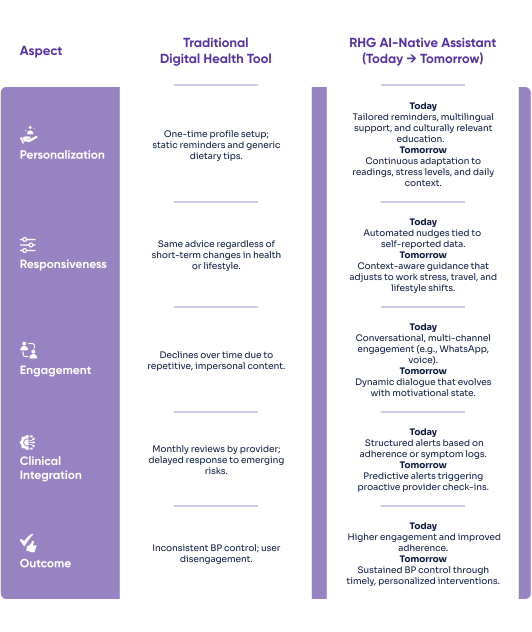
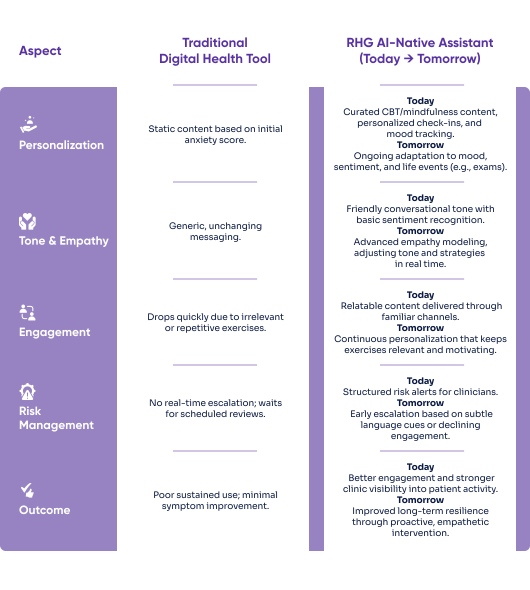
Exhibit 1: Hypertension Management — Traditional vs RHG
Caption: From static monitoring to adaptive, evolving care.
Exhibit 2: Adolescent Mental Health — Traditional vs RHG
Caption: From static self-help to empathetic, evolving support.
Top
crosschevron-down
snaptik
Rasio RTP Pragmatic Yang Dinilai Lebih Realistis Mulai Dipakai Untuk Menentukan Jam Bermain Secara DisiplinPendekatan Data Terarah Mengubah Cara Membaca Mahjong Ways Ini Dampaknya Pada Ritme Dan Konsistensi SesiTransisi Reel Mahjong Ways Terasa Lebih Halus Ini Cara Pemain Menangkap Arah Sesi Dari Pola KombinasiMemahami Dinamika Slot Digital Dari Pengalaman Pemula Kenapa Proses Belajar Sering TerlewatAnalisis Mendalam Mahjong Ways Pemetaan Ukuran Taruhan Dan Mode Spin Untuk Ritme Sesi Yang Lebih StabilSesi Pendek Roulette Live Lebih Menguras Fokus Ini Alasan Banyak Pemain Cepat Kelelahan Secara MentalCasino Fast Table Dan Pergantian Dealer Bagaimana Transisi Dealer Mengubah Ritme Dan Pengalaman SesiRTP Live Jadi Bahan Pantauan Komunitas Cara Membaca Perubahan Ritme Di Game Online Yang Sedang PopulerMenggabungkan Jam Bermain Pola Dan Strategi Di Mahjong Ways Untuk Menjaga Ritme Sesi Lebih TerukurMahjong Ways 2 Dari Sisi Teknologi Permainan Pemantauan Sistem Terbaru Untuk Membaca Perubahan RitmeRTP Live Dalam Kerangka Pola Mahjong Ways Dipakai Untuk Menilai Kondisi Sesi Dengan Sudut Pandang ObjektifMahjong Ways 2 Dan Ritme Waktu Bermain Cara Menentukan Durasi Sesi Yang Lebih Nyaman Dan TerkontrolPanduan Lengkap Memahami RTP Berbasis Perhitungan Cara Membaca Angka Dengan Ekspektasi Yang Lebih RealistisFluktuasi RTP Pragmatic Makin Ramai Dipantau Ini Cara Menilai Dampaknya Pada Ritme Bermain Secara TenangJam Bermain Ideal Pragmatic Play Mulai Terbaca Dari Kebiasaan Pemain Disiplin Ini Pola Yang Banyak DiikutiAnalisis Pemain Baru Mahjong Ways 2 Mengulas Pola Adaptasi Dan Langkah Pencegahan Agar Tidak Terbawa RitmeMengapa Pemain Live Casino Bisa Berubah Agresif Ini Pemicu Psikologis Yang Sering Terjadi Saat Sesi PanjangMengelola Ekspektasi Dan Keputusan Di Live Casino Pendekatan Rasional Agar Sesi Tetap Sehat Dan Tidak ImpulsifFlow Transition Model Untuk Mahjong Ways Cara Menganalisis Peralihan Pola Reel Dengan Kerangka Yang Lebih RapiStrategi Harian Mahjong Ways Memanfaatkan Auto Spin Untuk Menata Simbol Dan Menjaga Ritme Lebih RapiPemain Gates Of Olympus Dengan Performa Konsisten Punya Kebiasaan Khas Ini Pola Pengambilan KeputusannyaMenghitung Estimasi RTP Manual Di Mahjong Ways PG Soft Untuk Evaluasi Objektif Bukan Untuk Menebak HasilInovasi Data Di Casino Modern Mengubah Cara Memetakan Pola Dan RTP Dengan Pendekatan Yang Lebih RapiPergeseran Tempo Mahjong Ways 2 Di Fase Tertentu Mulai Terlihat Ini Sinyal Yang Sering Dicatat PemainScatter Mahjong Ways Terpantau Lebih Intens Di Fase High Volume Ini Tanda Yang Banyak DiperhatikanInteraksi Scatter Di Mahjong Ways 2 Bagaimana Hubungan Simbol Membentuk Arah Ritme SesiMembaca Volatilitas Di Baccarat Live Teknik Mengamati Tempo Meja Tanpa Terjebak Keputusan SpontanPemetaan Auto Spin Jadi Bahasan Karena Membantu Menjaga Tempo Rapi Dan Mengurangi Keputusan ImpulsifBaccarat Vs Roulette Saat Sesi Panjang Menguras Konsentrasi Ini Cara Pemain Menentukan Pilihan Yang Lebih StabilPG Soft Dan Pragmatic Play Bersaing Ketat Berebut Perhatian Pemain Ini Arah Tren Yang Mulai TerlihatBaccarat Di Casino Digital Mengandalkan Observasi Dan Kesabaran Ini Cara Menjaga Ritme Sesi Tetap TerkontrolPola Penyeimbang Mahjong Ways PG Soft Kerap Terlihat Setelah Jam Tinggi Ini Dampaknya Pada Tempo Dan Fokus SesiVariasi Tempo Dan Pola Spin Mengungkap Dinamika Reel Mengapa Ritme Sesi Bisa Terasa BerubahKebiasaan Strategis Pemain Berpengalaman Dalam Sesi Jangka Pendek Cara Mengelola Ritme Dan Batas BermainRTP Harian Dan Klaim Pola Sakti Ramai Dicari Ini Cara Menyikapinya Secara Lebih Rasional Dan AmanKlaim Pola Resmi PG Soft Ramai Dibahas Ini Cara Menyaring Informasi Agar Tidak Salah KaprahSweet Bonanza Xmas Di Pragmatic Play Disorot Karena Pola Bermain Musiman Yang Ramai Dipakai KomunitasPanduan Pemain Baru Gates Of Olympus Pragmatic Mengulas Pola Dasar Agar Ritme Sesi Lebih TerarahMembaca Alur Simbol Mahjong Ways 2 Tanpa Terburu Buru Jadi Kunci Ini Cara Menjaga Ritme Tetap StabilRTP Terkini Masuk Diskusi Keuangan Ini Cara Membaca Lonjakan Total Kemenangan Dengan Sudut Pandang RasionalMembaca Logika Perubahan Ritme Reel Mahjong Ways 2 Ketika Sesi Terasa Berbeda Apa Yang Sebenarnya TerjadiRTP Di Gates Of Olympus Dari Pragmatic Play Apa Yang Perlu Dipahami Sebelum Menyusun Pola Bermain Yang RealistisPsikologi Bermain Mahjong Ways Mempengaruhi Kualitas Keputusan Ini Dampaknya Pada Fokus Dan Ritme SesiMesin Mahjong Ways 2 Terlihat Lebih Sinkron Dan Masuk Fase Produktif Ini Sinyal Yang Mulai DipantauUpdate RTP Aktif Mahjong Ways 2 Mengulas Cara Pemain Menata Ritme Untuk Membidik Penggali Lebih TinggiMahjong Ways Dalam Kerangka Jam Bermain Terukur Cara Memahami RTP Dan Dinamika Free Spin Secara Lebih ObjektifSaat Scatter Dan Wild Memenuhi Layar Mahjong Ways 2 Begini Cara Menjaga Fokus Dan Kontrol KeputusanVariasi Ritme Spin Di Mahjong Ways Ramai Dibahas Begini Cara Pemain Membaca Tempo Sesi Secara RealistisMahjong Wins 3 Dan Hubungan Waktu Dengan Kesabaran Pemain Mengapa Ritme Sesi Sering Jadi Penentu KenyamananBlack Scatter Mahjong Ways Jadi Sorotan Karena Memberi Nuansa Sesi Berbeda Ini Pendekatan Yang Banyak DicobaMahjong Ways 2026 Membuka Peluang Naik Level Ini Strategi Efektif Yang Banyak Dipakai Pemain DisiplinMode Evaluasi Intensif Mahjong Ways 2 Menjadi Sorotan Bagi Pemain Modal Kecil Ini Risiko Dan AntisipasinyaRespons Sistem Mahjong Wins Tetap Stabil Di Tengah Kepadatan Spin Ini Alasan Sesi Terasa Lebih AmanFrame Hijau Mahjong Jadi Patokan Player Senior Ini Tanda Yang Mereka Pantau Pada Pola Putaran TertentuSinkronisasi Putaran Dan Fitur Spin Di Starlight Princess Analisis Ritme Yang Membuat Sesi Terasa BerbedaMahjong Ways 2 Dalam Catatan Harian Sesi Mengurai Auto Spin Dan Siklus Waktu Bermain Dengan Kerangka Yang Lebih RapiPutaran Wild Di Mahjong Ways 2 Dan Ritme Spin Berkelanjutan Mengapa Stabilitas Tempo Jadi Fokus Pengamatan PemainPemetaan Pola Mahjong Ways 2 Versi Analisis Cara Menyusun Catatan Sesi Agar Evaluasi Lebih Terukur Dan Tidak SpekulatifTiming Dan Reel Tengah Mulai Sinkron Di Mahjong Ways 2 Membuat Pola Permainan Terasa Lebih Mudah DibacaCasino Digital Jadi Hiburan Favorit Di Stop Pit Sopir Antar Lintas Ini Cerita Yang Ramai Diperbincangkan