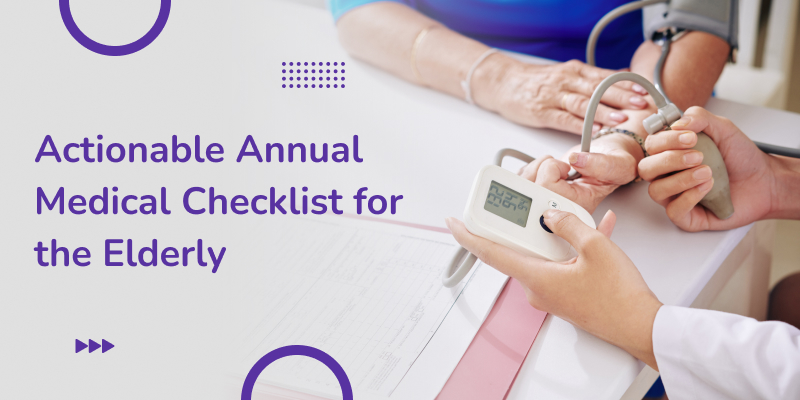
Actionable Annual Medical Checklist for the Elderly

As you get older, proactive healthcare becomes highly essential.
Preventive care isn’t just about treating illness — it is also about ensuring a longer, healthier, and more independent future.
The Centers for Disease Control and Prevention (CDC) emphasizes that routine screenings are particularly essential for older adults, as many age-related conditions develop slowly and may go undetected without regular preventive care. This preventive approach is further supported by healthcare management platforms — such as REAN Foundation’s REAN HealthGuru — designed to promote proactive health monitoring.
This guide provides a straightforward, comprehensive annual medical checklist for the elderly — a proactive tool that helps you stay vibrant and in control for the years ahead. But to take full advantage of your annual checkup, let’s first discuss why health screenings matter for seniors.
The Importance of Proactive Health Screenings in Your Senior Years
Annual checkups are your key tool for maintaining quality of life and independence — allowing doctors to catch health problems early when they are most treatable.
For seniors, these visits aren't just about fixing what’s broken — they are vital for uncovering serious conditions that often develop without any clear signs.
- High blood pressure — also known as hypertension — remains undetected for years without causing noticeable symptoms. Without proper management, it significantly increases the risk of heart disease, stroke, and kidney damage.
- Similarly, elevated cholesterol levels often present no symptoms but are one of the major factors that increase the risk of heart disease and stroke.
This is exactly where preventive care through health screenings becomes essential.
Adopting this proactive approach is key to:
- Enabling the early detection of health issues so treatment can begin right away
- Preventing the progression of diseases
- Managing existing conditions like heart disease effectively
- Lowering disease risks
- Improved treatment outcomes
Now that we understand the importance of early detection and preventive screenings, the next step in your health journey is to look at the key tests included in a full body checkup for the elderly.
Key Tests in a Full Body Checkup for the Elderly
Simple blood tests provide a detailed look into your internal health — empowering you to make necessary lifestyle adjustments for your organ function and cardiovascular wellness.
A thorough full body checkup for the elderly includes the following fundamental tests:
- Complete Blood Count (CBC): One of the most common blood tests. It checks your blood cells to find problems like anemia and to ensure your immune system is working properly.
- Comprehensive Metabolic Panel (CMP): A broad screening tool that assesses your body's metabolism and the function of key organs. Specifically, it evaluates how well your kidneys are filtering waste to help detect potential kidney disease.
- Lipid Panel (Cholesterol Screening): Monitors your cholesterol numbers — crucial for preventing heart disease and stroke, as high cholesterol levels can lead to plaque buildup in your arteries.
- Thyroid Stimulating Hormone (TSH) Test: Measures the level of thyroid stimulating hormone in your blood to check on your metabolism.
- Vitamin D Test: Checks for vitamin D deficiency, which is crucial for bone health because it helps your body absorb calcium and prevent osteoporosis — significantly reducing the risk of fractures.
- HbA1c Test (Diabetes Screening): Shows average blood sugar levels over the past few months — highly essential for individuals at risk for diabetes.
These blood tests are just one part of a complete preventive strategy. Other targeted screenings are just as vital for catching different health issues early — let’s explore these tests next.
Also Read: Medical Emergency Preparedness For Seniors - A Checklist
Critical Health Screenings to Prioritize for Early Detection
While blood tests provide crucial insights, targeted health screenings — such as for cancer — are vital for early detection, when treatment is most effective.
Your doctor may recommend these tests based on your:
- Age
- Health history
- Risk factors
Here are the essential screenings — tailored to address different aspects of senior health:
Cancer Screening
Early cancer detection is crucial in improving treatment outcomes and survival rates.
- Mammogram: This health screening for breast cancer is a key tool, and starting at age 45 (with the option at 40), it is recommended every one to two years.
- Colonoscopy: This screening for colorectal cancer is typically advised starting at age 45 because it allows doctors to find and remove polyps before they become cancerous.
- Prostate Cancer Screening: This Prostate-Specific Antigen (PSA) test is a blood test that measures a protein level to help screen for prostate cancer, and men around 50 should discuss it with their doctor.
- Skin Check: A simple skin check — where a doctor inspects your skin for suspicious spots — can catch melanoma early when it is most treatable.
Bone Health Screening
Maintaining strong bones is foundational for your mobility and independence as you age.
- Bone Density Scan (DEXA Scan): Measures bone strength to screen for osteoporosis — helping to prevent fractures before they happen.
Sensory Health Screenings
Critical but often overlooked — essential for your safety and quality of life.
- Regular Eye Exams: They can detect serious conditions like glaucoma, cataracts, and macular degeneration that lead to vision loss.
- Hearing Tests: Vital because hearing loss has been shown to significantly increase the risk of cognitive decline and dementia over time — making early detection crucial.
These physical screenings — together with the blood tests — form the key components of the annual medical checklist for the elderly.
But a truly comprehensive approach to your health also includes protecting yourself from preventable illnesses and monitoring your cognitive well-being — which we'll cover next.
Maintaining Overall Wellness With Vaccinations and Mental Health Checks
Staying up-to-date with immunizations is a vital part of senior health. In addition to an annual flu shot, be sure to ask your doctor about essential vaccines for shingles and pneumonia.
- Shingles vaccine for adults 50 and older and the Pneumococcal vaccine at age 65 and older to protect against pneumonia and meningitis are recommended.
Your mental health is just as vital as your physical health.
- A depression screening is crucial because untreated depression can worsen other health conditions — but it is highly treatable once identified.
- Brief cognitive screening tests can check for early signs of dementia — allowing for better management and planning.
Finally, since falls are the leading cause of injury in seniors, a fall risk assessment is essential for maintaining your independence.
- Your provider can evaluate your fall risk by asking a few simple questions about your balance and daily habits.
These holistic checks complete your toolkit for a productive doctor's visit — ensuring you address both body and mind.
Take Charge of Your Health as You Age
Using this checklist helps you take charge of your well-being and sets you up for a healthier year ahead.
Ultimately, this checklist:
- Transforms your doctor's visit by preparing you for a more collaborative planning session.
- Serves as a powerful tool for family members — supporting your role as a healthcare advocate.
This proactive partnership between Senior, Doctor, and Family is the key to maintaining independence and quality of life.
At REAN Foundation, we are committed to empowering individuals globally with accessible tools to manage health risks, symptoms, and medication adherence for proactive healthcare. Connect with us today — start your journey to better health!
As you get older, proactive healthcare becomes highly essential.
Preventive care isn’t just about treating illness — it is also about ensuring a longer, healthier, and more independent future.
The Centers for Disease Control and Prevention (CDC) emphasizes that routine screenings are particularly essential for older adults, as many age-related conditions develop slowly and may go undetected without regular preventive care. This preventive approach is further supported by healthcare management platforms — such as REAN Foundation’s REAN HealthGuru — designed to promote proactive health monitoring.
This guide provides a straightforward, comprehensive annual medical checklist for the elderly — a proactive tool that helps you stay vibrant and in control for the years ahead. But to take full advantage of your annual checkup, let’s first discuss why health screenings matter for seniors.
The Importance of Proactive Health Screenings in Your Senior Years
Annual checkups are your key tool for maintaining quality of life and independence — allowing doctors to catch health problems early when they are most treatable.
For seniors, these visits aren't just about fixing what’s broken — they are vital for uncovering serious conditions that often develop without any clear signs.
- High blood pressure — also known as hypertension — remains undetected for years without causing noticeable symptoms. Without proper management, it significantly increases the risk of heart disease, stroke, and kidney damage.
- Similarly, elevated cholesterol levels often present no symptoms but are one of the major factors that increase the risk of heart disease and stroke.
This is exactly where preventive care through health screenings becomes essential.
Adopting this proactive approach is key to:
- Enabling the early detection of health issues so treatment can begin right away
- Preventing the progression of diseases
- Managing existing conditions like heart disease effectively
- Lowering disease risks
- Improved treatment outcomes
Now that we understand the importance of early detection and preventive screenings, the next step in your health journey is to look at the key tests included in a full body checkup for the elderly.
Key Tests in a Full Body Checkup for the Elderly
Simple blood tests provide a detailed look into your internal health — empowering you to make necessary lifestyle adjustments for your organ function and cardiovascular wellness.
A thorough full body checkup for the elderly includes the following fundamental tests:
- Complete Blood Count (CBC): One of the most common blood tests. It checks your blood cells to find problems like anemia and to ensure your immune system is working properly.
- Comprehensive Metabolic Panel (CMP): A broad screening tool that assesses your body's metabolism and the function of key organs. Specifically, it evaluates how well your kidneys are filtering waste to help detect potential kidney disease.
- Lipid Panel (Cholesterol Screening): Monitors your cholesterol numbers — crucial for preventing heart disease and stroke, as high cholesterol levels can lead to plaque buildup in your arteries.
- Thyroid Stimulating Hormone (TSH) Test: Measures the level of thyroid stimulating hormone in your blood to check on your metabolism.
- Vitamin D Test: Checks for vitamin D deficiency, which is crucial for bone health because it helps your body absorb calcium and prevent osteoporosis — significantly reducing the risk of fractures.
- HbA1c Test (Diabetes Screening): Shows average blood sugar levels over the past few months — highly essential for individuals at risk for diabetes.
These blood tests are just one part of a complete preventive strategy. Other targeted screenings are just as vital for catching different health issues early — let’s explore these tests next.
Also Read: Medical Emergency Preparedness For Seniors - A Checklist
Critical Health Screenings to Prioritize for Early Detection
While blood tests provide crucial insights, targeted health screenings — such as for cancer — are vital for early detection, when treatment is most effective.
Your doctor may recommend these tests based on your:
- Age
- Health history
- Risk factors
Here are the essential screenings — tailored to address different aspects of senior health:
Cancer Screening
Early cancer detection is crucial in improving treatment outcomes and survival rates.
- Mammogram: This health screening for breast cancer is a key tool, and starting at age 45 (with the option at 40), it is recommended every one to two years.
- Colonoscopy: This screening for colorectal cancer is typically advised starting at age 45 because it allows doctors to find and remove polyps before they become cancerous.
- Prostate Cancer Screening: This Prostate-Specific Antigen (PSA) test is a blood test that measures a protein level to help screen for prostate cancer, and men around 50 should discuss it with their doctor.
- Skin Check: A simple skin check — where a doctor inspects your skin for suspicious spots — can catch melanoma early when it is most treatable.
Bone Health Screening
Maintaining strong bones is foundational for your mobility and independence as you age.
- Bone Density Scan (DEXA Scan): Measures bone strength to screen for osteoporosis — helping to prevent fractures before they happen.
Sensory Health Screenings
Critical but often overlooked — essential for your safety and quality of life.
- Regular Eye Exams: They can detect serious conditions like glaucoma, cataracts, and macular degeneration that lead to vision loss.
- Hearing Tests: Vital because hearing loss has been shown to significantly increase the risk of cognitive decline and dementia over time — making early detection crucial.
These physical screenings — together with the blood tests — form the key components of the annual medical checklist for the elderly.
But a truly comprehensive approach to your health also includes protecting yourself from preventable illnesses and monitoring your cognitive well-being — which we'll cover next.
Maintaining Overall Wellness With Vaccinations and Mental Health Checks
Staying up-to-date with immunizations is a vital part of senior health. In addition to an annual flu shot, be sure to ask your doctor about essential vaccines for shingles and pneumonia.
- Shingles vaccine for adults 50 and older and the Pneumococcal vaccine at age 65 and older to protect against pneumonia and meningitis are recommended.
Your mental health is just as vital as your physical health.
- A depression screening is crucial because untreated depression can worsen other health conditions — but it is highly treatable once identified.
- Brief cognitive screening tests can check for early signs of dementia — allowing for better management and planning.
Finally, since falls are the leading cause of injury in seniors, a fall risk assessment is essential for maintaining your independence.
- Your provider can evaluate your fall risk by asking a few simple questions about your balance and daily habits.
These holistic checks complete your toolkit for a productive doctor's visit — ensuring you address both body and mind.
Take Charge of Your Health as You Age
Using this checklist helps you take charge of your well-being and sets you up for a healthier year ahead.
Ultimately, this checklist:
- Transforms your doctor's visit by preparing you for a more collaborative planning session.
- Serves as a powerful tool for family members — supporting your role as a healthcare advocate.
This proactive partnership between Senior, Doctor, and Family is the key to maintaining independence and quality of life.
At REAN Foundation, we are committed to empowering individuals globally with accessible tools to manage health risks, symptoms, and medication adherence for proactive healthcare. Connect with us today — start your journey to better health!
About The Author